GRAHAM'S PORTO - Ne Oublie 1882
Ne Oublie 1882 belongs to that almost unreal category of wines for which time is no longer just a factor of aging, but an integral part of the work. Its story begins in 1882, the year when the young Scotsman Andrew James Symington arrived in Porto and began working in the Port trade, inaugurating a family adventure that continues today into the fifth generation. More than a century later, his descendants chose to name this wine "Ne Oublie," referring to the old motto of the Graham family and as a tribute to their ancestors' decision to anchor their destiny in Portugal, in the Douro, and in the world of Port. Preserved for about 130 years in old oak casks, this Single Harvest Tawny comes from a heritage of which only three casks remained at the time of the bottling decision. The Symington family sacrificed only one, the other two being kept for future generations, which measures the heritage dimension of this release. From this cask, only 656 bottles were drawn, each individually numbered, making Ne Oublie less a traditional limited edition than a liquid fragment of Port history. Graham's here brings together one hundred and thirty years of aging, several generations of cellar masters and coopers, and a family continuity that has become practically impossible to reproduce today.
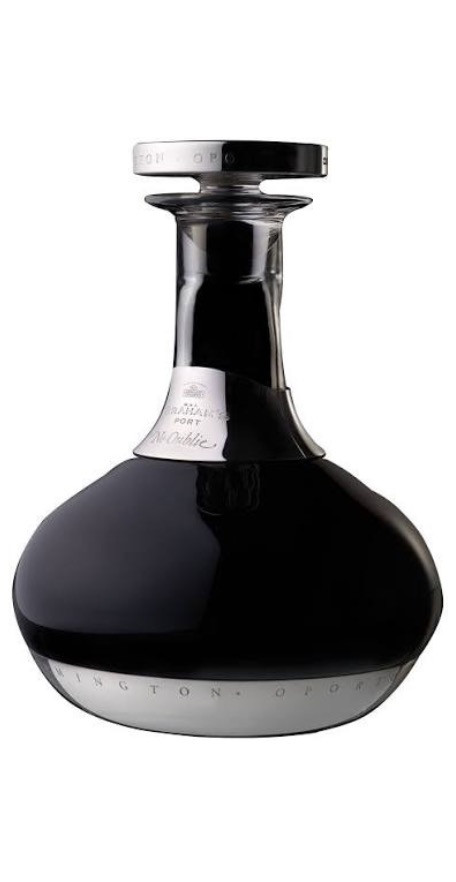
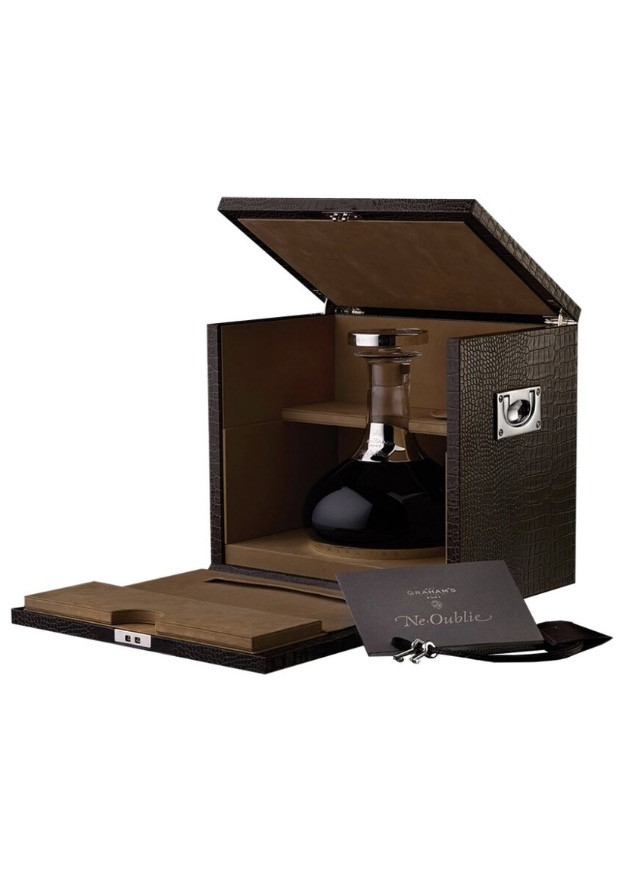
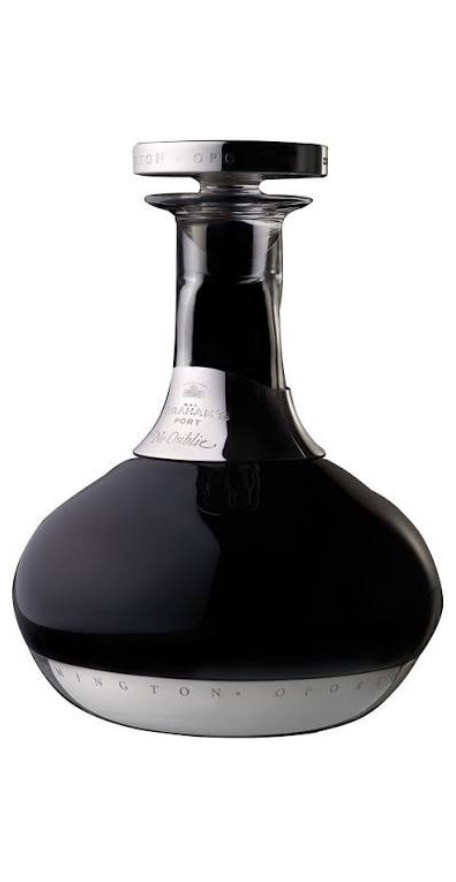
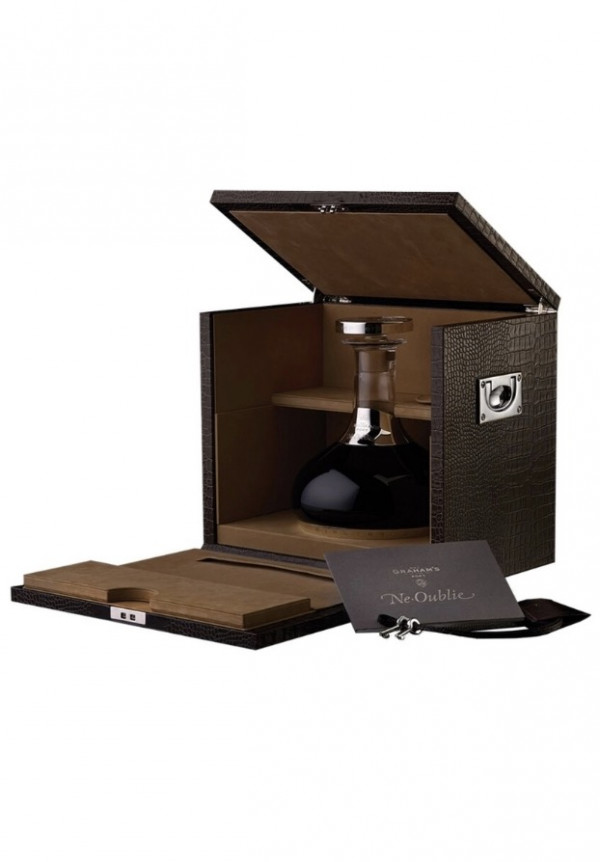
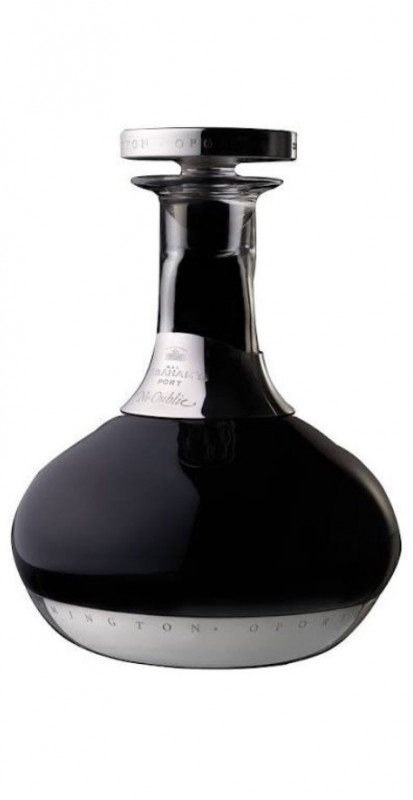
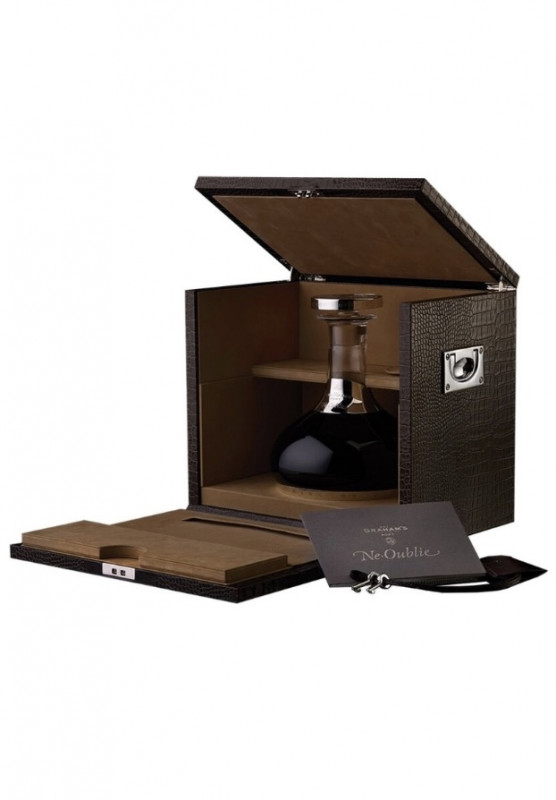
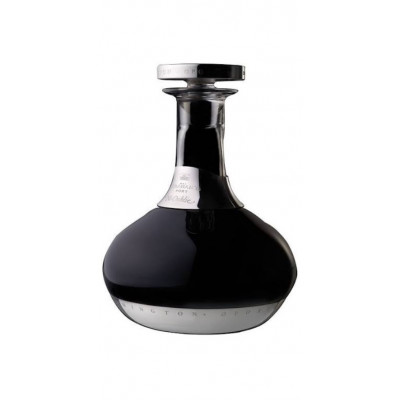
The presentation of Ne Oublie was designed to match this extraordinary provenance, bringing together the craftsmanship of the three countries that make up the Symington family's heritage. The Port rests in a crystal decanter handmade by Atlantis in Portugal, specifically designed for this edition. Three solid silver rings, shaped and engraved by the Scottish goldsmiths Hayward & Stott and hallmarked by the Edinburgh Assay Office, adorn each decanter. The whole is placed in a custom case made by Smythson of Bond Street, a historic British house specializing in leatherwork. Portugal, Scotland, and England thus come together in an object whose every component symbolically extends the history of the Grahams and the Symingtons. Behind this spectacular presentation remains the essential: a Port that has crossed more than a century in wood, successively overseen by several generations of cellar masters and coopers capable of accompanying its evolution without breaking this extremely fragile balance. At this level of age, the concentration does not come from a search for power but from decades of evaporation and slow oxidation, which gradually transform the wine into a matter of exceptional aromatic intensity and persistence.
In the glass, Ne Oublie 1882 has long left the realm of fresh fruit to enter that of great secular oxidative wines, with an extremely deep amber robe edged with golden and greenish reflections. The bouquet unfolds in layers of dried fig, date, candied apricot, and citrus, then evolves towards tobacco, molasses, nuts, and nuances reminiscent of brown caramel. The concentration is immense, but what truly distinguishes the wine is the vitality of its acidity, essential to balance a matter that has become almost creamy after more than a century in cask. Sensations of hazelnut, dried fruits, orange peel, butterscotch, and old spices succeed each other without forming a heavy or fixed profile. The mouth has a texture of rare density, almost satiny, before an incisive freshness gives new momentum and carries the tasting towards an exceptionally long finish. This contrast between extreme richness and energy explains how a wine born in 1882 can still seem alive, precise, and extraordinarily detailed more than a century after its birth. Ne Oublie is naturally enjoyed on its own, in very small quantities and with time, but can accompany some very sober pairings such as aged walnuts, slightly sweetened dark chocolate, or certain blue cheeses; its true vocation remains that of a wine for meditation and collection, an almost intact testimony of a vanished wine world.
Aging: about 130 years in old oak casks
Production: 656 numbered decanters
This item is limited to 1 unit per customer.