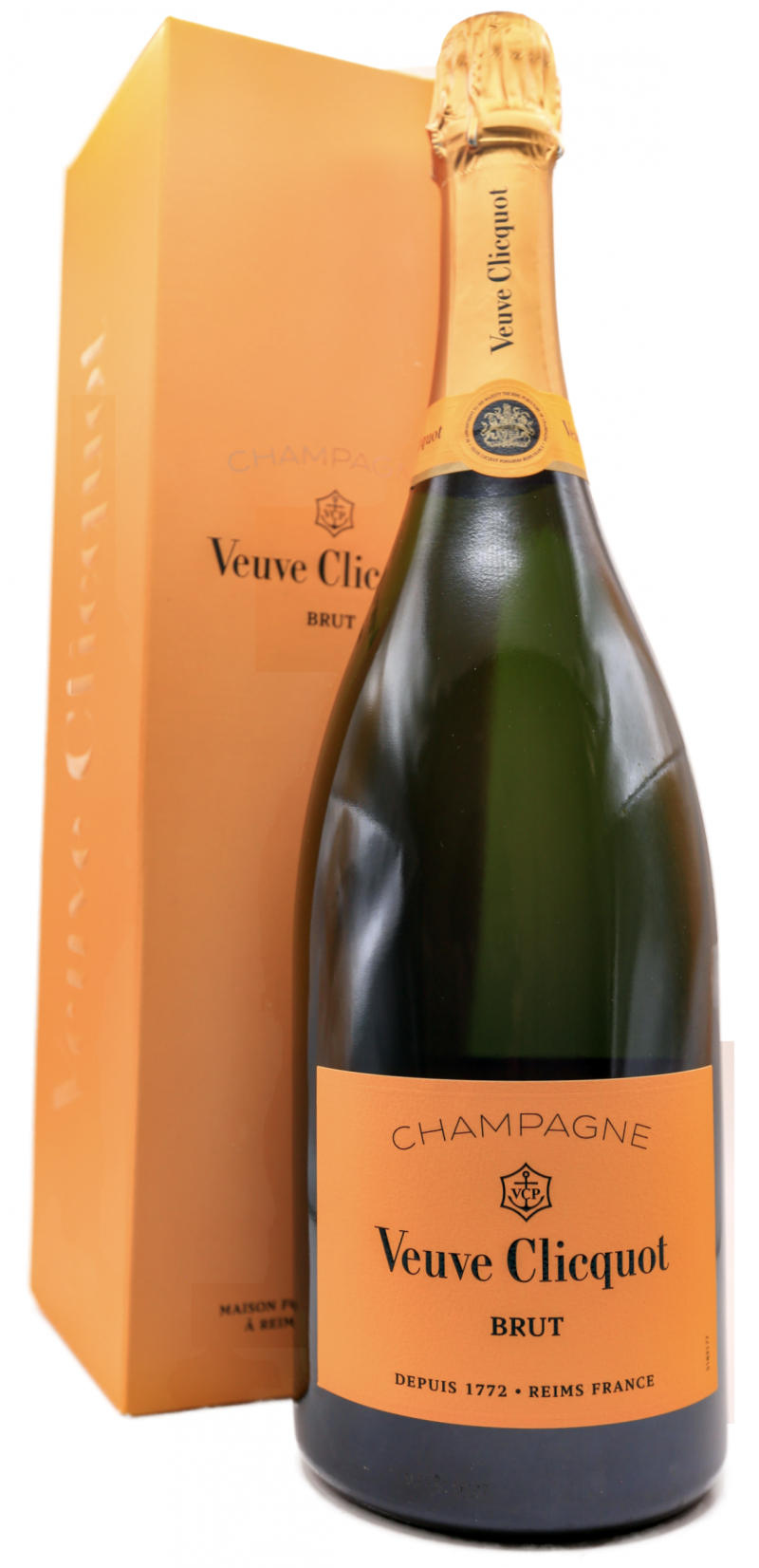
Veuve Clicquot Champagne - Yellow Label Brut Magnum
Founded in 1772 in Reims by Philippe Clicquot, the House of Veuve Clicquot is one of the historic great names of Champagne. Its destiny is inseparable from that of Barbe-Nicole Ponsardin, who became a widow at only 27 years old, took the reins of the company in 1805, and gradually transformed a family business into an international reference. Visionary and bold, Madame Clicquot contributed to several major advances in the making of champagne, notably the improvement of the riddling table in 1816, which allows obtaining wines of remarkable clarity. True to its motto "Only one quality, the very first," the House developed a style recognizable above all, based on the predominance of Pinot Noir, aromatic richness, and consistency of blends. Created in 1877, the famous yellow label quickly became its emblem, symbolizing the energy and spirit of innovation of the House. The Brut Yellow Label today embodies this identity in a generous, structured, and elegant champagne, made from a wide selection of Champagne crus. Presented in a 150 cl magnum, it benefits from a format particularly appreciated by enthusiasts, which promotes a harmonious evolution of the wine and excellent preservation of its freshness.
The Veuve Clicquot Yellow Label Brut Champagne is based on a blend dominated by Pinot Noir, which generally represents 50 to 55% of the composition, complemented by 28 to 33% Chardonnay and 15 to 20% Meunier. This significant proportion of Pinot Noir is the historical signature of the House, bringing structure, depth, and a vinous character to the champagne. Chardonnay contributes finesse, elegance, and freshness to the whole, while Meunier enriches the blend with roundness and fruity expression. The grapes come from a selection of 50 to 60 Champagne crus, reflecting the diversity of the terroirs of the Montagne de Reims, Côte des Blancs, and Vallée de la Marne. One of the great particularities of the Yellow Label lies in the use of a significant proportion of reserve wines, which can reach 45% of the blend, allowing the preservation of the House style continuity while adding complexity and depth. Each wine is vinified separately before being selected and blended with precision, following a method that favors balance between power, freshness, and elegance. After the secondary fermentation, the champagne benefits from extended aging on lees in the cellars of Reims, progressively developing its creamy texture and characteristic aromas of brioche and pastry. The Brut dosage, generally between 9 and 10 grams per liter, completes this balance by adding perfectly integrated roundness. In magnum, the lower proportion of oxygen relative to the volume of wine favors slower evolution and better preservation of aromatic complexity.
The Veuve Clicquot Yellow Label Brut Magnum reveals a bright golden yellow robe, crossed by a fine, regular, and particularly elegant effervescence. Its expressive bouquet opens with aromas of ripe apple, pear, and white peach, accompanied by hints of fresh citrus and delicate flowers. Upon aeration, gourmand notes of brioche, toasted bread, vanilla, and dried fruits enrich this aromatic palette, reflecting the complexity brought by reserve wines and aging on lees. On the palate, the attack is generous and harmonious, with ample body and a creamy texture reflecting the predominance of Pinot Noir. Orchard fruit flavors blend with those of ripe citrus, while well-integrated acidity brings freshness and dynamism to the whole. Chardonnay highlights the wine's finesse, while Meunier contributes to its suppleness and immediately appealing character. The finish, long and balanced, extends on notes of yellow fruits, brioche, and fine toasted touches, leaving a pleasant impression of freshness. The magnum format allows this harmony to be preserved over time and offers particularly interesting aging potential, while constituting an ideal presentation for special occasions. A champagne for conviviality as much as gastronomy, the Yellow Label will perfectly accompany a refined aperitif, oysters, scallops, smoked salmon, roasted poultry, or aged Comté cheese.
Grape varieties: 50 to 55% Pinot Noir, 28 to 33% Chardonnay, 15 to 20% Meunier