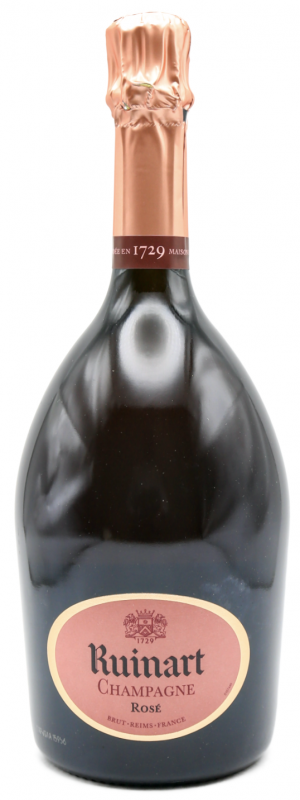
Champagne Ruinart Rosé
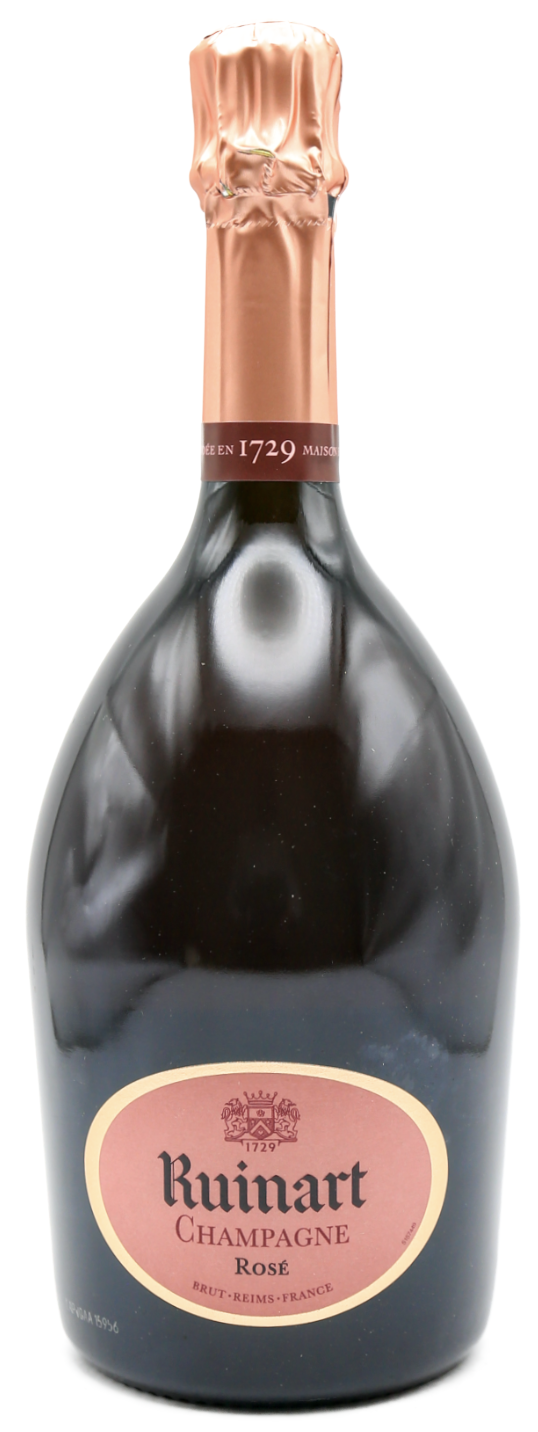
Founded in Reims in 1729, Ruinart is the oldest champagne house and has maintained since its origins a privileged connection with Chardonnay, a grape variety that brings freshness and brightness to its style. Rosé holds a special place in this history: as early as 1764, the House was already marketing a rosé champagne, then referred to as "œil de perdrix". The current cuvée continues this heritage in a contemporary interpretation where the freshness of Chardonnay meets the fruitiness and structure of Pinot Noir. It blends grapes from 30 to 40 crus of the Côte des Blancs, Montagne de Reims, and Vallée de la Marne, with a proportion of reserve wines that varies according to the editions. Ruinart's identity is expressed here more through aromatic finesse and brightness than power, with a rosé built around a subtle balance between freshness and roundness. This approach gives the wine an immediately recognizable personality, delicate enough to retain elegance while possessing the necessary structure to accompany food.
The blend consists of 45% Chardonnay, from the Côte des Blancs and Montagne de Reims, complemented by 43% Pinot Noir vinified in white and 12% vinified in red, coming from Montagne de Reims and Vallée de la Marne. This presence of Pinot Noir vinified in red gives the champagne its color and part of its fruity expression, without masking the freshness brought by Chardonnay. The grapes are hand-harvested, then the wines ferment in temperature-controlled stainless steel tanks before undergoing malolactic fermentation. The blend incorporates 20 to 30% reserve wines from several harvests, then the wine rests two to three years in the cellar to gain smoothness and precision. The dosage of 8 g/l maintains a certain roundness, perfectly suited to the soft texture sought by the House. This construction explains the character that is both fruity, structured, and delicately creamy of Ruinart Rosé, which favors finesse of detail rather than a demonstrative expression.
The color is adorned with coral and rosewood hues, with a fine effervescence that accompanies without dominating the body. The nose opens on pomegranate, lychee, and guava, joined by notes of fresh red berries and a delicate floral tone evoking rose. Upon aeration, nuances of sweet spices, tonka bean, and nutmeg bring more depth to this very fruity expression. The palate retains a clear freshness, but its texture remains round and supple, with a Pinot Noir that gives presence and a Chardonnay that maintains the finish in a precise and bright register. A touch of pink grapefruit and peppermint prolongs the tasting with a fresh and slightly saline sensation. This champagne can accompany smoked salmon, langoustines, tuna tartare, or shellfish, but also roasted poultry or duck breast with citrus, pairings that echo its alliance between fruit and freshness. Served around 8 to 10 °C in a sufficiently wide champagne glass, it can be appreciated as an aperitif or during a meal.
Grape varieties: 45% Chardonnay, 43% Pinot Noir vinified in white, 12% Pinot Noir vinified in red