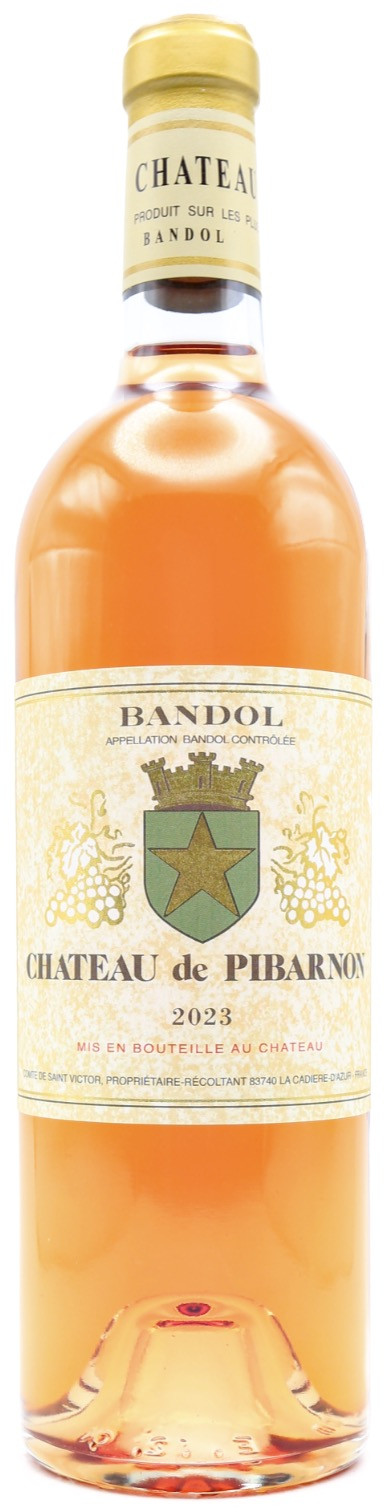
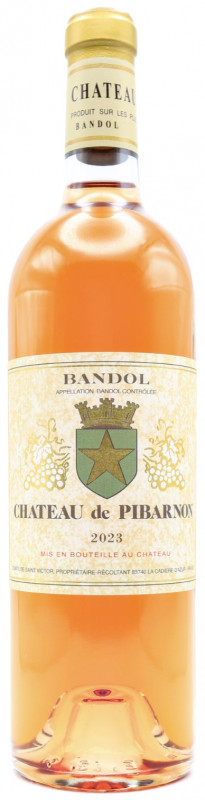
Château de Pibarnon - Rosé 2023
Overlooking the Mediterranean from the heights of La Cadière-d’Azur, Château de Pibarnon occupies one of the most spectacular sites in the Bandol appellation. The vineyard terraces climb up to about 300 meters in altitude, within a vast natural amphitheater that promotes air circulation and a gradual ripening of the grapes. The Triassic soils, particularly ancient and rich in limestone, are one of the estate’s distinctive features. Taken over by Henri and Catherine de Saint Victor in 1978, the estate is now managed by their son Éric de Saint Victor. The work undertaken over the decades has restored and expanded a demanding vineyard where the slope requires a strong human presence. Organic farming, certified since 2019, is complemented by several practices inspired by biodynamics. Pibarnon considers its rosé as a terroir and gastronomic wine, built to evolve well beyond its first season.
The 2023 Rosé blends 65% Mourvèdre and 35% Cinsault from twenty hectares of hillsides. The particularly low yields of this harvest, limited to about 23 hectoliters per hectare, favored concentrated and expressive grapes. The harvest is done manually by a regular team attentive to the integrity of the bunches. The Cinsault is pressed directly to bring fruit and a soft texture, while the Mourvèdre is obtained by direct bleeding and pressing. The two grape varieties are blended before a long fermentation carried out in stainless steel tanks at an average temperature close to 20 °C. The wine then continues its aging for six months in tank to preserve its aromatic freshness while harmonizing its structure. Marked by a relatively dry year, the 2023 vintage combines density, energy, and contained power.
The color shows a deep salmon hue, animated by coppery and slightly orange reflections. The nose opens on ripe strawberry, raspberry, and cherry, then evolves towards blood orange, sweet spices, and a touch of licorice. The palate has a fleshy and pulpy texture, balanced by freshness that keeps the whole lively. Mourvèdre brings depth and an unusual structure for a rosé, while Cinsault softens the texture with its generous fruit. Fine bitters prolong the mid-palate and lead to a saline, persistent, and flavorful finish. With bottle aging, the wine will gain mineral complexity and spicy nuances without losing its brightness. It will accompany red mullet, bottarga, saffron risotto, anchovy paste, Iberian ham, roasted lamb, or charcoal-grilled pork.
Grape varieties: 65% Mourvèdre, 35% Cinsault